South Sudan: A Beauty, A Wrong Plane, A Midwife
It’s the calmness
“It’s funny you say that,” I tell my colleague Raela. “That is the sound of the plane.”
We’re seated outside a small lodging in a town called Mvolo, in Western Equatoria State, South Sudan. Our lodge custodian, Mayanja, a Ugandan, is sitting right across from us. She’s just announced that she’s not feeling well. Hellen, our star nurse and midwife, who has just walked into the compound, leans forward, studies her quietly and says, almost matter-of-factly, ‘This feels like the onset of malaria.’
It’s the confidence.
We first met Hellen Hadia in 2022, when she was still a student in Maridi, a busier town in the south of Mvolo, about a 5-6-hour drive away, but in the same state of Western Equatoria, quietly finishing her studies. Even then, there was something that made you pay attention. She doesn’t shout or speak too much. No. But there was something.
On this trip, we had revisited this phenomenal midwife. A super-midwife, really, now a fully qualified midwife, working in remote South Sudan. We learnt that already children in villages are being named after her, not because she is just a midwife or just a nurse, but because of who she is as a human being.
It was incredible to see her in her element: walking to homes, visiting mothers, checking their babies, making sure they are healing, and resting. She knows their stories: She knows who lost a baby, who is pregnant again, and who is still scared from the last birth. You can feel how much she cares.
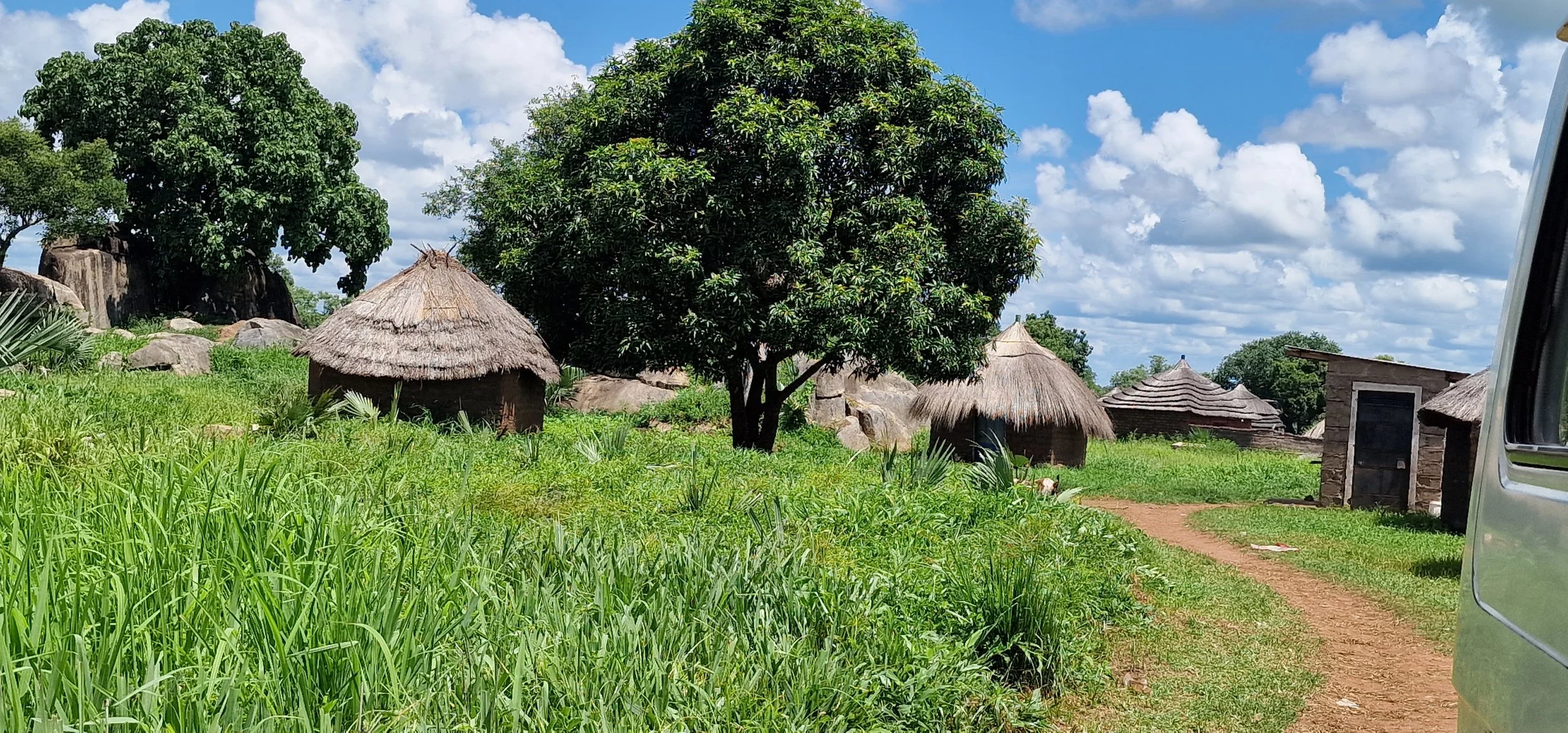
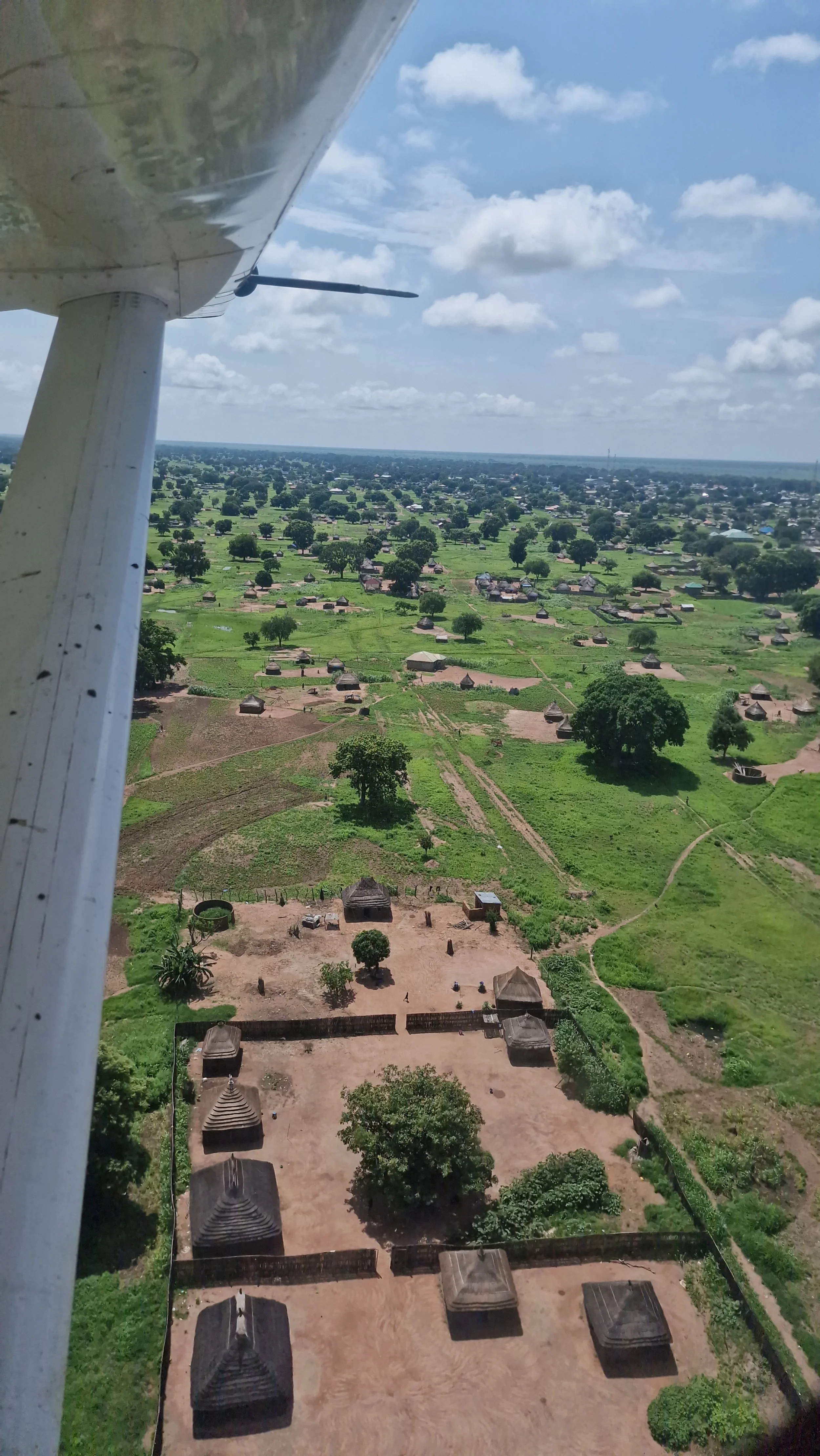
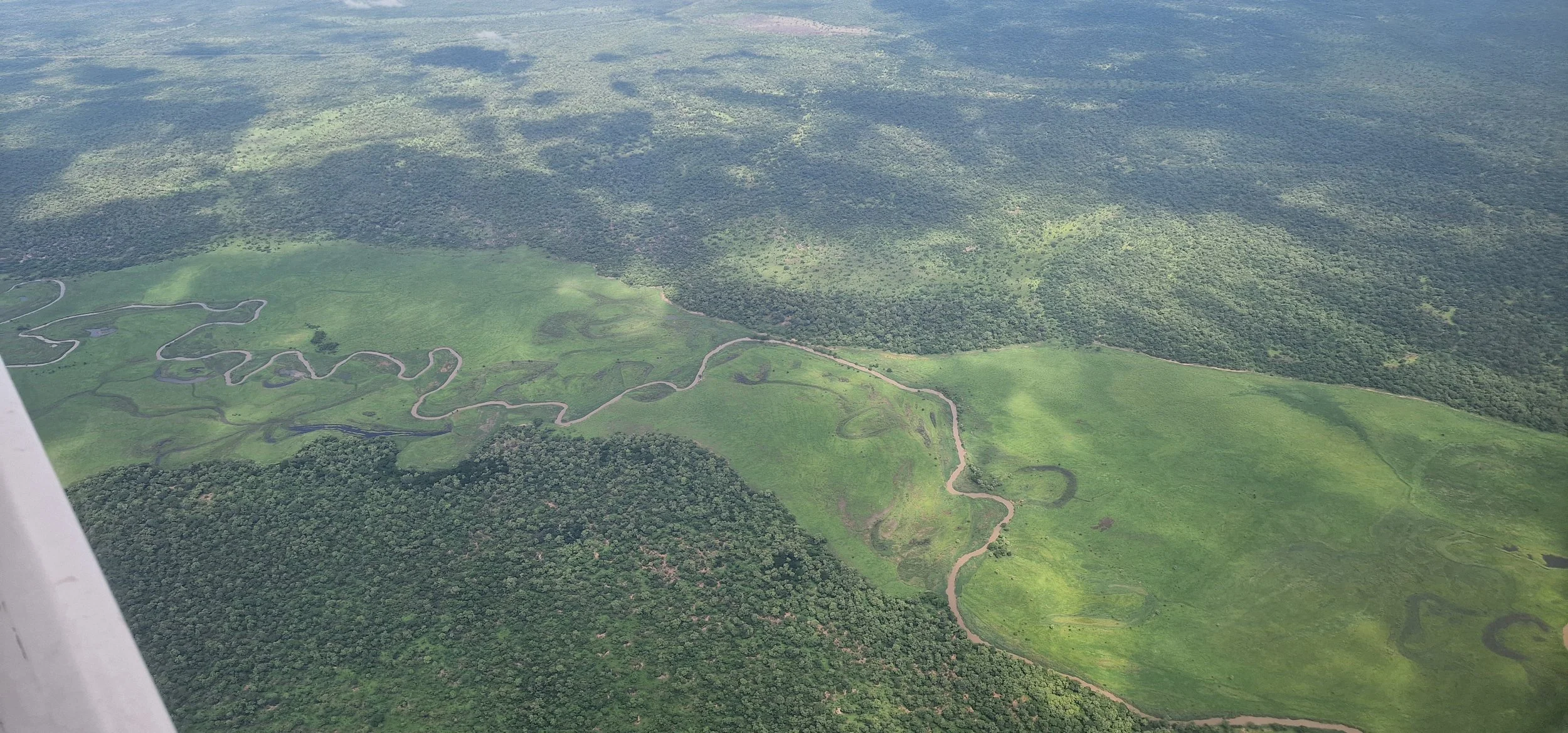
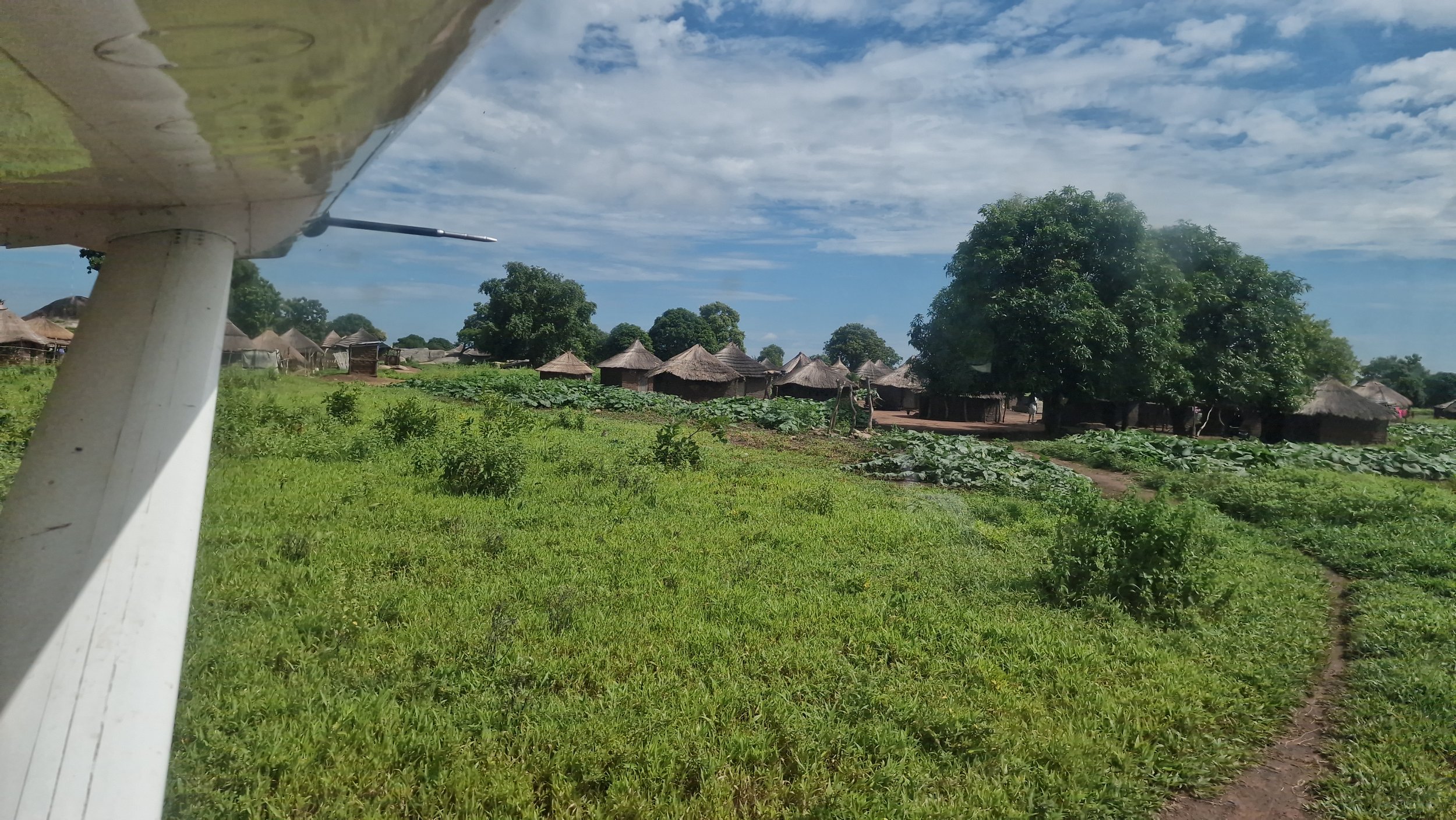
Mvolo is beautiful, almost disarmingly so. It is hard to explain without sounding like you’re exaggerating. It’s untouched in a way that feels almost ancient. It’s like a place you dream about, then you actually go there: Forest paths dotted with thatched homes, water-lilied rivers gliding past quietly, and birds that move different orchestras in the morning before the sun is up.
But life is not easy. I mean, in the last three days that we were here, mosquitoes were literally on our necks. Diseases like malaria are still everywhere. Access to health services is a daily struggle, with distance, occasional conflict, cost, and flooded roads during the rainy season. All of these combine into a dangerous mix for pregnant women and newborns.
We heard stories of mothers transported on bicycles (when lucky), giving birth on the way to distant health facilities: they were giving birth on the roadside, in the bushes, like the animals that roam those forests. Not because they want to, but because help is simply too far.
And it’s midwives like Hellen, overloaded, under-resourced, often on call day and night, who remain the quiet line of defence. They are the ones that communities cling to when everything else feels unreliable.

Tired as she is sometimes, Hellen is the hope.
When we first drove into Mvolo, theres something so peaceful about it. The dirt road shakes itself out into a small market made of sticks and grass. It feels like a different world there. At the last little junction before the centre disappears into the forest again, Caro, our food vendor, has a small open stall where she makes us beans, local vegetables, and rice. Simple, comforting, perfect.
The main road into the centre crosses another road that heads north. That other road also doubles as the airstrip for the small Cessna aircraft that fly in and out once a week. Before landing, pilots often have to swoop down low to chase away goats comfortably sunbathing on the airstrip. It’s very funny, as long as you’re not the one on the plane. Because when you are the one in the plane, you’re just there thinking: “I know we’re supposed to land…but are we landing now? Or is this the practice run?”
During the rainy season, it gets even more interesting. When the clouds are too low and visibility is poor, the pilot simply can’t land in Mvolo. Sometimes you end up on a random dirt road in another location, waiting for the clouds to clear at your actual destination while the pilot radios his ground contact for updates.
Bush-flight life.
Wrong Plane Alert
So let’s go back to our morning banter…. “It’s funny you say that,” I tell my colleague Raela. “That is the sound of the plane.”
On this particular morning, we were waiting for the 11 a.m. MAF flight back to Juba. We had spent three nights. After advising Mayanja, our lodge custodian, to visit the hospital for a proper check, Hellen turned to us and asked why we were still so relaxed while the only weekly flight had already landed at 9 a.m. “Ours isn’t until 11,” we replied confidently.
She laughed. You know that deep, knowing laugh that instantly exposes your naivety? Yes, that one. Rael and I looked at each other.
Sharp, quick and sensing the urgency, Steve, our DOP, was already halfway to the “airstrip.” By the time the rest of us rushed over, we found him practically attached to the pilot. He was trying to convince him to wait for us. What a dream boat!
I must say, the pilot looked unconvincing.
Our tickets apparently said we were meant to be picked up somewhere else. As far as he was concerned, we were standing at the wrong airstrip, waving at the wrong plane.
So we stood there, in the middle of this dirt airstrip, watching him make calls and radio checks while Steve hovered near him like a human reminder: We are not staying behind.
Eventually, he gets a call. Hands animated, a nod, an easing smile and a yes. He let us in.
That familiar hole opened up in my stomach as we climbed into the sky. Once again, I must say, from above, it is even more beautiful. South Sudan’s Equatoria region looks almost dreamlike from the air, with those lush rivers, the deep green forests, and the soft curves of the land.
It’s the kind of place you hear about in stories.
A place where life is hard and fragile, yes. But also where women like Hellen Hadia are saving lives.